
Shop
Showing 385–408 of 1766 results
-
Motherboard
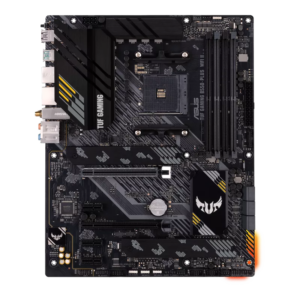
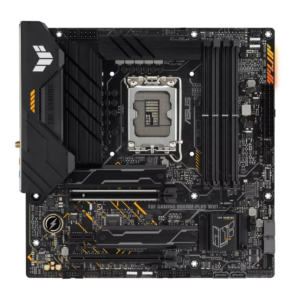
ASUS TUF GAMING B550 PLUS WIFI II AMD AM4 MOTHERBOARD
Model: TUF GAMING B550-PLUS WIFI II. CPU Support: Refer to www.asus.com for CPU support list.
Memory: 4 x DIMM, Max. 128GB DDR4 (various OC speeds). Storage: M.2_1 (PCIe 4.0/3.0 x4 & SATA), M.2_2 (PCIe 3.0 x4 & SATA), 6 x SATA 6Gb/s.
Wireless: 2×2 Wi-Fi 6 (802.11ax) + Bluetooth 5.2. USB: Rear: 2x USB 3.2 Gen2 (1 Type-A + 1 Type-C), 4x USB 3.2 Gen1, 2x USB 2.0. Audio: Realtek 7.1 Surround Sound HD Audio.
SKU: 107565 -
Motherboard
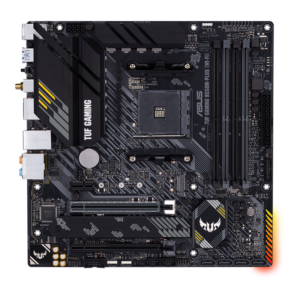
ASUS TUF GAMING B550M PLUS WIFI AMD AM4 MOTHERBOARD
Model: ASUS TUF GAMING B550M-PLUS (WI-FI)
CPU Socket: AMD AM4 (supports 3rd‑gen Ryzen)
Chipset: AMD B550Memory: 4 × DIMM, up to 128 GB DDR4 (various O.C. speeds)
Graphics Output: 1 × DisplayPort 1.2, 1 × HDMI 2.1 (4K@60 Hz)Expansion: 1 × PCIe 4.0 x16, 1 × PCIe 3.0 x16 (x4 mode), 1 × PCIe 3.0 x1
Storage: 2 × M.2 (PCIe 4.0 x4 / SATA), 4 × SATA 6Gb/s
Network: 2.5 Gb Ethernet (Realtek RTL8125B) + Wi‑Fi 6 (Intel AX200, 2×2, up to 2.4 Gbps)SKU: 101173 -
Motherboard
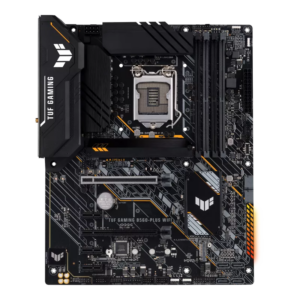
ASUS TUF GAMING B560 PLUS WIFI INTEL LGA1200 MOTHERBOARD
ASUS TUF GAMING B560-PLUS WIFI motherboard supports Intel Socket LGA1200 for 10th and 11th Generation Core, Pentium Gold and Celeron processors on the B560 chipset.
It features DDR4 memory up to 5000(OC) MHz, dual PCIe x16 slots (PCIe 4.0 with 11th gen CPUs, PCIe 3.0 from chipset), M.2 slots (PCIe 4.0 x4 with 11th gen, PCIe 3.0/SATA), six SATA 6Gb/s ports, and extensive USB connectivity including USB 3.2 Gen 2 Type-A and Gen 1 Type-C.
Audio is handled by Realtek ALC897 7.1 HD audio, with rear I/O offering DisplayPort, HDMI, Wi‑Fi module, 2.5Gb Ethernet, and audio jacks.
SKU: 103440 -
Motherboard
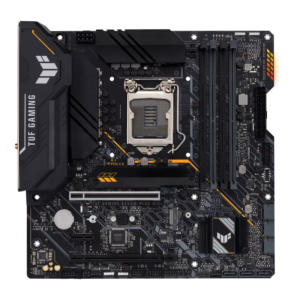
ASUS TUF GAMING B560M PLUS WIFI INTEL LGA1200 MOTHERBOARD
Model: TUF GAMING B560M-PLUS WIFI; CPU: Intel Socket LGA1200 for 11th and 10th Gen Core, Pentium Gold and Celeron, supports Turbo Boost 2.0 and Turbo Boost Max 3.0 (CPU dependent); Chipset: B560; Memory: DDR4 up to 5000(OC) MHz, non-ECC, un-buffered, dual channel, XMP and OptiMem II; Graphics: DisplayPort 1.4 and HDMI 1.4/2.0 (resolution depends on CPU).
Expansion: One PCIe 4.0/3.0 x16 slot (CPU dependent), one PCIe 3.0 x16, one PCIe 3.0 x1; Storage: M.2 slots (PCIe 4.0 x4 for 11th Gen, PCIe 3.0 x4/SATA for B560), six SATA 6Gb/s; Network: TUF LANGuard Ethernet, Intel Wi-Fi 6 2×2, Bluetooth 5.0; USB: Rear: 2xUSB 3.2 Gen 2 Type-A, 3xUSB 3.2 Gen 1 (2xType-A + 1xType-C), 4xUSB 2.0 Type-A; plus internal headers for additional ports.
SKU: 102915 -
Motherboard
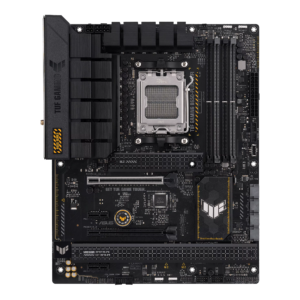
ASUS TUF GAMING B650 PLUS WIFI MOTHERBOARD
ASUS TUF Gaming B650-Plus Wi‑Fi (model 90MB1BZ0-M0IAY0) is an ATX motherboard designed for AMD Socket AM5 CPUs. It measures 30 × 24.4 × 5 cm, weighs about 1.2 kg, and is finished in black. The board supports DDR5 memory, PCIe 5.0 and includes integrated Wi‑Fi.
SKU: 1086713 -
Motherboard
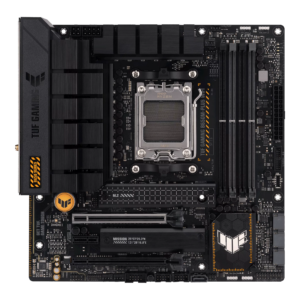
ASUS TUF GAMING B650M-PLUS WIFI MOTHERBOARD
Model: TUF GAMING B650M-PLUS WIFI; CPU: AMD AM5 socket supporting Ryzen 7000, 8000 and 9000 series; Chipset: AMD B650.
Memory: Up to 256 GB DDR5 across 4 DIMM slots; Expansion: 1 × PCIe 4.0 x16 (x16/x8/x4) and 1 × PCIe 4.0 x1; Storage: 2 × M.2 (PCIe 5.0 x4 / PCIe 4.0 x4) and 4 × SATA 6 Gb/s ports.
Networking: Realtek 2.5 Gb Ethernet, Wi‑Fi 6 (802.11ax) and Bluetooth 5.2; USB: Rear: 1 × USB 3.2 Gen 2×2 Type‑C, 2 × USB 3.2 Gen 2, 1 × USB 3.2 Gen 1, 4 × USB 2.0; Front: 1 × USB 3.2 Gen 1 (Type‑C) plus headers for additional ports.
SKU: 1086725 -
Motherboard
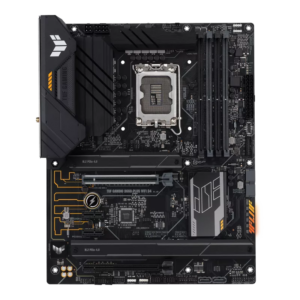
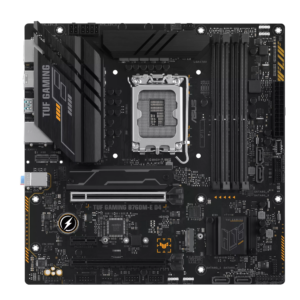
ASUS TUF GAMING B660 PLUS WIFI DDR4 INTEL LGA1700 MOTHERBOARD
Model: ASUS TUF GAMING B660-PLUS WIFI D4
CPU: Intel Socket LGA1700 for 13th and 12th Gen Intel Core, Pentium Gold and Celeron processors
Chipset: Intel B660Memory: 4 x DIMM, max 128GB DDR4 up to 5333(OC) MHz, dual-channel, supports Intel XMP
Graphics: 1 x DisplayPort 1.4 (4K@60Hz), 1 x HDMI 2.1 (4K@60Hz)Expansion Slots: 1 x PCIe 5.0/4.0/3.0 x16, 1 x PCIe 3.0 x16 (x4 mode), 2 x PCIe 3.0 x1
Storage: 3 x M.2 slots (PCIe 4.0 x4/x2/x4), 4 x SATA 6Gb/s
Ethernet: Intel 2.5Gb
Wireless and Bluetooth: Wi-Fi 6 2×2, Bluetooth 5.2
USB: Rear: 1x USB 3.2 Gen2x2 Type-C, 1x USB 3.2 Gen2 Type-A, 3x USB 3.2 Gen1 Type-A, 1x USB 2.0 Type-A; Front: 1x USB 3.2 Gen2 Type-C, 1x USB 3.2 Gen1 header (2 ports), 2x USB 2.0 headers (4 ports)SKU: 1083216 -
-
Motherboard
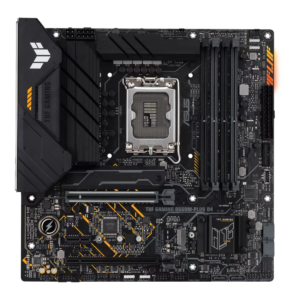
ASUS TUF GAMING B660M-PLUS WIFI INTEL LGA1700 MOTHERBOARD
Model: ASUS TUF GAMING B660M-PLUS WIFI, CPU: Intel Socket LGA1700 for 12th Gen Core, Pentium Gold, Celeron, Chipset: Intel B660. Memory: 4 x DIMM, up to 192GB DDR5 (various speeds), Graphics: 1 x DisplayPort 1.4, 1 x HDMI 2.1 (4K@60Hz). Expansion: 1 x PCIe 5.0 x16, 1 x PCIe 3.0 x16 (x4 mode), 1 x PCIe 4.0 x1; Storage: 2 x M.2 slots (PCIe 4.0 x4), 4 x SATA 6Gb/s; Network: 2.5Gb Ethernet, Wi-Fi 6 (2×2), Bluetooth 5.2; USB: Rear: 1x USB 3.2 Gen 2×2 Type‑C, 4x USB 3.2 Gen 2 Type‑A, 1x USB 3.2 Gen 1 Type‑A, 2x USB 2.0 Type‑A; Front: 1x USB 3.2 Gen 1 Type‑C header (+2), 1x USB 3.2 Gen 1 header (+2), 2x USB 2.0 headers (+4).
SKU: 106735 -
GRAPHICS CARD
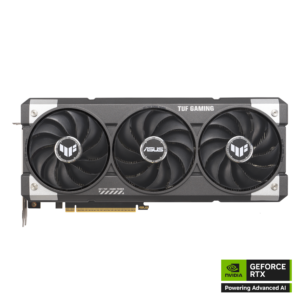
ASUS TUF GAMING GEFORCE RTX 5060 TI 8GB GDDR7 GRAPHICS CARD TUF-RTX5060TI-O8G-GAMING
Model Name: TUF-RTX5060-O8G-GAMING
Graphics Engine: NVIDIA GeForce RTX 5060
CUDA Cores: 3840
OpenGL: 4.6
Engine Clock: OC mode: 2677MHz, Default mode: 2640MHz (Boost)
Memory Interface: 128-bit
Video Memory: 8GB GDDR7
Memory Speed: 28 Gbps
AI Performance: 648
Power Connector: 1 x 8-pinSKU: GPUAsus-006 -
GRAPHICS CARD
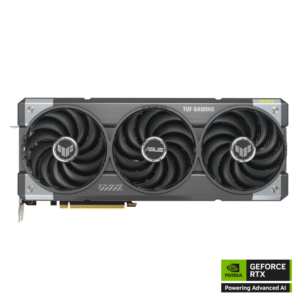
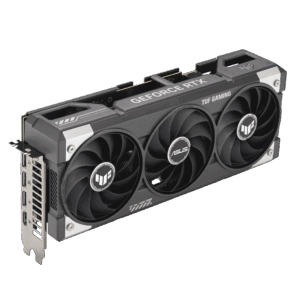
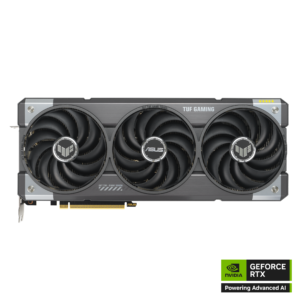
ASUS TUF GAMING GEFORCE RTX 5070 TI 16GB GDDR7
Model: TUF-RTX5070TI-16G-GAMING
Graphic Engine: NVIDIA® GeForce RTX™ 5070 Ti
AI Performance: 1406 TOPs
Bus Standard: PCI Express 5.0
OpenGL: OpenGL® 4.6
Video Memory: 16GB GDDR7
Engine Clock: OC mode: 2482MHz Default mode: 2452MHz (Boost Clock)
CUDA Cores: 8960
Memory Speed: 28 Gbps
Memory Interface: 256-bitSKU: 1092486 -
GRAPHICS CARD
ASUS TUF GAMING GEFORCE RTX 5080 OC EDITION 16GB GDDR7
Model: TUF-RTX5080-O16G-GAMING. Graphic Engine: NVIDIA® GeForce RTX™ 5080.
Video Memory: 16GB GDDR7. Memory Interface: 256‑bit. Memory Speed: 30 Gbps. Bus Standard: PCI Express 5.0.
Engine Clock: OC Mode: 2730 MHz, Default Mode: 2700 MHz (Boost Clock). CUDA Cores: 10,752. AI Performance: 1858 TOPs. OpenGL: OpenGL® 4.6.
SKU: 1092136 -
GRAPHICS CARD
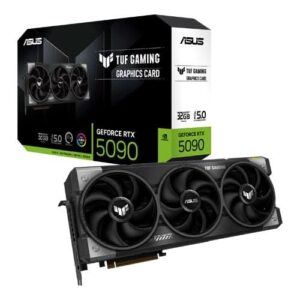
ASUS TUF GAMING GEFORCE RTX 5090 32GB GDDR7
Model: TUF-RTX5090-32G-GAMING
Graphic Engine: NVIDIA® GeForce RTX™ 5090
AI Performance: TBD
Bus Standard: PCI Express 5.0
OpenGL: OpenGL®4.6
Video Memory: 32GB GDDR7
Engine Clock: TBD
CUDA Core: 21760
Memory Speed: 28 Gbps
Memory Interface: 512-bitSKU: 1098846 -
GRAPHICS CARD
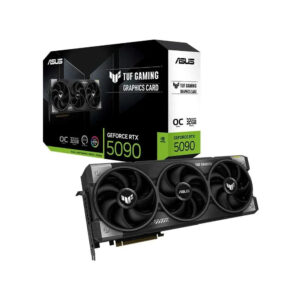
ASUS TUF GAMING GEFORCE RTX 5090 OC EDITION 32GB GDDR7
Model: TUF-RTX5090-O32G-GAMING
Graphic Engine: NVIDIA® GeForce RTX™ 5090
Video Memory: 32GB GDDR7
AI Performance: TBD
Bus Standard: PCI Express 5.0
Open GL: OpenGL 4.6
Engine Clock: TBD
Cuda Core: 21760
Memory Speed: 28 Gbps
Memory Interface: 512 BitSKU: 1092495 -
GRAPHICS CARD
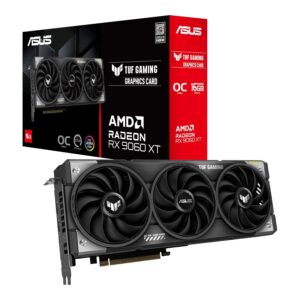
ASUS TUF Gaming Radeon RX 9060 XT 16GB GDDR6 OC Edition Graphics Card
Model: TUF-RX9060XT-O16G-GAMING
Graphic Engine: AMD Radeon™ RX 9060 XT
Bus Standard: PCI Express 5.0
OpenGL: Open GL 4.6
Video Memory: 16GB GDDR6
Engine Clock: TDB
Stream Processors: 2048
Memory Speed: 20 Gbps
Memory Interface: 128 Bit
Resolution: Digital Max Resolution 7680 x 4320SKU: PRIMERX9060XT016G -
GRAPHICS CARD
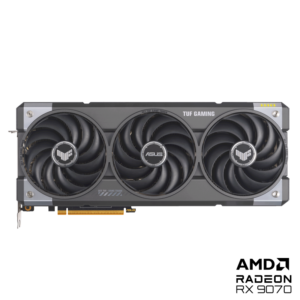
ASUS TUF GAMING RADEON RX 9070 OC EDITION 16GB GDDR6 GRAPHICS CARD TUF-RX9070-O16G-GAMING
 GRAPHICS CARD
ASUS TUF GAMING RADEON RX 9070 OC EDITION 16GB GDDR6 GRAPHICS CARD TUF-RX9070-O16G-GAMING
Model: TUF-RX9070-O16G-GAMING
Graphic Engine: AMD Radeon™ RX 9070
Bus Standard: PCI Express 5.0
OpenGL: OpenGL® 4.6
Video Memory: 16GB GDDR6
Engine Clock: TBD
Stream Processors: 3584
Memory Speed: 20 Gbps
Memory Interface: 256-bit
Max Resolution: 7680 x 4320
SKU: 1092733 -
GRAPHICS CARD
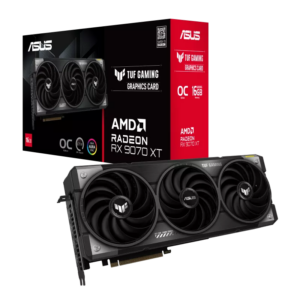
ASUS TUF Gaming Radeon RX 9070 XT OC Edition 16GB GDDR6 Graphics Card
Model: TUF-RX9070XT-O16G-GAMING
Chipset: AMD RADEON
GPU: RX 9070 XT
Engine Clock: OC mode(GPU Tweak III): up to 3080 MHz (Boost Clock)/up to 2540 MHz (Game Clock) Default mode: up to 3060 MHz (Boost Clock)/up to 2520 MHz (Game Clock)
PCI EXPRESS: 5.0
MEMORY CLOCK: 20 Gbps
MEMORY SIZE: 16 GB
MEMORY INTERFACE: 256-BIT
MEMORY TYPE: GDDR6
OpenGL: 4.6SKU: TUF-RX9070XT-O16G-GAMING -
GRAPHICS CARD
ASUS TUF GAMING RTX 5060 TI OC 16GB GDDR7 GRAPHICS CARD
Model name: TUF-RTX5060TI-O16G-GAMING
Graphics Engine: NVIDIA® GeForce RTX™ 5060 Ti
CUDA cores: 4608
OpenGL®: OpenGL® 4.6
Engine Clock: OC mode: 2692MHz Default mode: 2662MHz (Boost Clock)
Memory Interface: 128 bit
Video Memory: 16GB GDDR7
Memory Speed: 28 Gbps
AI Performance: 785
Power Connector: 1 x 16-pinSKU: 1097128 -
-
Motherboard
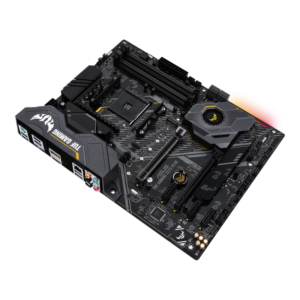
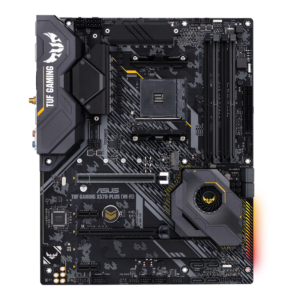
ASUS TUF GAMING X570 PLUS AMD AM4 MOTHERBOARD
Model: TUF GAMING X570‑PLUS
CPU: AMD AM4 Socket for Ryzen 5000/5000 G/4000 G/3000/3000 G/2000/2000 G Series Desktop Processors
Chipset: AMD X570Memory: 4 × DIMM, up to 128 GB DDR4, Dual Channel, ECC support varies by CPU
Graphics: Integrated graphics in Ryzen G‑series processors; HDMI 1.4b (4096×2160 @24 Hz) and DisplayPort (4096×2160 @60 Hz)
Multi‑GPU: AMD CrossFireX supportExpansion Slots: 1× PCIe 4.0 x16, 1× PCIe 3.0 x16, 1× PCIe 3.0/2.0 x16 (x8 mode), 1× PCIe 4.0 x16 (x4 mode), 3× PCIe 4.0 x1
Storage: 2× M.2 Socket 3 (PCIe 3.0/4.0 x4 & SATA), 8× SATA 6Gb/s, RAID 0,1,10
LAN: Realtek L8200A with ASUS Turbo LAN and TUF LANGuard
Audio: Realtek ALC S1200 8‑Channel HD Audio CODECSKU: 101175 -
Motherboard
ASUS TUF GAMING X570 PLUS WIFI AMD AM4 MOTHERBOARD
We need to clean the description: remove marketing fluff, keep technical accuracy, output clean HTML using only
, ,
. Should be concise 2-4 sentences max. Probably we need to produce a paragraph with strong tags for labels and line breaks.We need to remove asterisks and references like “* Refer to www.asus.com for CPU support list.” etc. Also remove promotional language like “Supports AMD CrossFireX Technology” is okay technical. Remove fluff like “TUF LANGuard”? That’s a feature name, maybe keep as technical? It’s a brand feature but not fluff? Might be okay. But we should keep only factual specs.
We need to produce something like:
Model: TUF GAMING X570-PLUS (WI-FI)
CPU: AMD AM4 Socket for AMD Ryzen 5000 Series/5000 G-Series/4000 G-Series/3000 Series/3000 G-Series/2000 Series/2000 G-Series Desktop Processors
Chipset: AMD X570
Memory: 4 x DIMM, Max. 128GB, DDR4 up to 5100(O.C) MHz, Dual Channel
Graphics: Integrated Graphics in AMD Ryzen 5000 G-Series/4000 G-Series/3000 G-Series/2000 G-Series Desktop Processors; HDMI 1.4b up to 4096×2160@24Hz; DisplayPort up to 4096×2160@60Hz
Multi‑GPU: Supports AMD CrossFireX Technology
Expansion Slots: 1 x PCIe 4.0 x16 (x16 mode), 1 x PCIe 3.0 x16 (x16 mode), 1 x PCIe 3.0/2.0 x16 (x8 mode), 1 x PCIe 4.0 x16 (max x4 mode), 2 x PCIe 4.0 x1
Storage: 1 x M.2 Socket 3 (PCIe 3.0 x4/SATA) via CPU, 1 x M.2 Socket 3 (PCIe 4.0 x4/SATA) via chipset, 8 x SATA 6Gb/s, RAID 0,1,10
LAN: Realtek L8200A, ASUS Turbo LAN Utility, TUF LANGuard
Wireless: Intel Wireless‑AC 9260, Wi‑Fi 802.11 a/b/g/n/ac, dual‑band 2.4/5 GHz, MU‑MIMO, HT20/HT40/HT80/HT160, up to 1.73 GbpsBut need to keep only
, ,
. No other tags. So we can have line breaks insideusing
. Use for labels.We need to be concise 2-4 sentences max. However using many
lines might be considered multiple sentences? Probably okay. But we can compress into a few sentences separated by
. The instruction: “Keep it concise — 2-4 sentences maximum.” So we need to produce maybe 3 sentences, each ending with a period, and we can use
to separate sentences? Actually
is line break, not sentence separator. But we can still use
to separate lines within a paragraph. However sentences count is based on periods. We need to limit number of sentences to 2-4. So we need to produce maybe 3 sentences, each containing multiple specs separated by commas or semicolons.Thus we need to craft maybe 3 sentences:
Sentence 1: Model, CPU, Chipset.
Sentence 2: Memory, Graphics, Expansion Slots.
Sentence 3: Storage, LAN, Wireless.But we need to keep tags for labels. We can embed them inside sentences.
Example:
Model: TUF GAMING X570-PLUS (WI-FI). CPU: AMD AM4 Socket for AMD Ryzen 5000 Series/5000 G-Series/4000 G-Series/3000 Series/3000 G-Series/2000 Series/2000 G-Series Desktop Processors. Chipset: AMD X570.
That’s 3 sentences (each ends with period). Then second sentence maybe:
Memory: 4 x DIMM, Max. 128GB, DDR4 up to 5100(O.C) MHz, Dual Channel. Graphics: Integrated Graphics in AMD Ryzen 5000 G-Series/4000 G-Series/3000 G-Series/2000 G-Series Desktop Processors; HDMI 1.4b up to 4096×2160@24Hz; DisplayPort up to 4096×2160@60Hz. Expansion Slots: 1 x PCIe 4.0 x16 (x16 mode), 1 x PCIe 3.0 x16 (x16 mode), 1 x PCIe 3.0/2.0 x16 (x8 mode), 1 x PCIe 4.0 x16 (max x4 mode), 2 x PCIe 4.0 x1.
Third sentence:
Storage: 1 x M.2 Socket 3 (PCIe 3.0 x4/SATA) via CPU, 1 x M.2 Socket 3 (PCIe 4.0 x4/SATA) via chipset, 8 x SATA 6Gb/s, RAID 0,1,10. LAN: Realtek L8200A, ASUS Turbo LAN Utility, TUF LANGuard. Wireless: Intel Wireless‑AC 9260, Wi‑Fi 802.11 a/b/g/n/ac, dual‑band 2.4/5 GHz, MU‑MIMO, HT20/HT40/HT80/HT160, up to 1.73 Gbps.
That’s three paragraphs each
. Each paragraph contains multiple sentences? Actually each paragraph currently has multiple sentences separated by periods. That would be more than 1 sentence per paragraph. The instruction says 2-4 sentences maximum overall, not per paragraph. So we need total sentences across output to be 2-4. So we need to limit total number of sentences (periods) to 2-4.
Thus we need to produce maybe 3 sentences total, each sentence can be long and contain many specs separated by commas or semicolons, but only ending with a period at the end of each sentence.
Thus we need to craft three sentences, each ending with a period, and we can use
for line breaks inside sentences? But
would break the sentence visually but not affect sentence count? Probably still counts as part of same sentence. Safer to avoid
inside sentences? But we need to use
tags as allowed. We could use
to separate lines but not add extra periods. However if we put
inside a sentence, it’s still same sentence (no period). So we can use
to format.Thus we can produce something like:
Model: TUF GAMING X570-PLUS (WI-FI). CPU: AMD AM4 Socket for AMD Ryzen 5000 Series/5000 G-Series/4000 G-Series/3000 Series/3000 G-Series/2000 Series/2000 G-Series Desktop Processors. Chipset: AMD X570.
Memory: 4 x DIMM, Max. 128GB, DDR4 up to 5100(O.C) MHz, Dual Channel. Graphics: Integrated Graphics in AMD Ryzen 5000 G-Series/4000 G-Series/3000 G-Series/2000 G-Series Desktop Processors; HDMI 1.4b up to 4096×2160@24Hz; DisplayPort up to 4096×2160@60Hz. Expansion Slots: 1 x PCIe 4.0 x16 (x16 mode), 1 x PCIe 3.0 x16 (x16 mode), 1 x PCIe 3.0/2.0 x16 (x8 mode), 1 x PCIe 4.0 x16 (max x4 mode), 2 x PCIe 4.0 x1.
Storage: 1 x M.2 Socket 3 (PCIe 3.0 x4/SATA) via CPU, 1 x M.2 Socket 3 (PCIe 4.0 x4/SATA) via chipset, 8 x SATA 6Gb/s, RAID 0,1,10. LAN: Realtek L8200A, ASUS Turbo LAN Utility, TUF LANGuard. Wireless: Intel Wireless‑AC 9260, Wi‑Fi 802.11 a/b/g/n/ac, dual‑band 2.4/5 GHz, MU‑MIMO, HT20/HT40/HT80/HT160, up to 1.73 Gbps.Now count sentences: each period ends a sentence. Let’s count:
1. Model: … (period after WI-FI) -> sentence 1
2. CPU: … (period after Desktop Processors) -> sentence 2
3. Chipset: … (period after AMD X570) -> sentence 3
4. Memory: … (period after Dual Channel) -> sentence 4
5. Graphics: … (period after 60Hz) -> sentence 5
6. Expansion Slots: … (period after x1) -> sentence 6
7. Storage: … (period after 10) -> sentence 7
8. LAN: … (period after LANGuard) -> sentence 8
9. Wireless: … (period after Gbps) -> sentence 9That’s 9 sentences, too many.
We need to reduce to 2-4 sentences total. So we need to combine many specs into fewer sentences, using commas/semicolons, and only put a period at the end of each sentence.
Thus we need maybe 3 sentences:
Sentence 1: Model, CPU, Chipset.
Sentence 2: Memory, Graphics, Expansion Slots.
Sentence 3: Storage, LAN, Wireless.Each sentence ends with a period. Inside we can use
for line breaks but not add extra periods.Thus we need to ensure only three periods total.
Let’s craft:
Sentence 1: “Model: TUF GAMING X570-PLUS (WI-FI). CPU: AMD AM4 Socket for AMD Ryzen 5000 Series/5000 G-Series/4000 G-Series/3000 Series/3000 G-Series/2000 Series/2000 G-Series Desktop Processors. Chipset: AMD X570.”
But that has three periods (after WI-FI, after Desktop Processors, after AMD X570) -> three sentences already. We need only one period for sentence 1. So we need to avoid putting periods inside the sentence except at the end. So we cannot use periods after each label; we need to separate with commas or semicolons, and only final period.
Thus we need to avoid using periods inside the sentence. The tags themselves don’t contain periods. So we can do:
“Model: TUF GAMING X570-PLUS (WI-FI), CPU: AMD AM4 Socket for AMD Ryzen 5000 Series/5000 G-Series/4000 G-Series/3000 Series/3000 G-Series/2000 Series/2000 G-Series Desktop Processors, Chipset: AMD X570.”
Then end with a period.
Thus sentence 1: Model, CPU, Chipset.
Sentence 2: Memory, Graphics, Expansion Slots.
Sentence 3: Storage, LAN, Wireless.
Now we need to ensure no internal periods. However some specs have periods like “DDR4 5100(O.C)/5000(O.C)/…” includes periods inside the numbers like “5100(O.C)” includes parentheses but no period. Actually “O.C” includes a period! That’s a period inside the spec. That would create an extra sentence if we keep it. We need to avoid periods inside the sentence. The spec includes “O.C.” which has a period after C. That’s a period. We cannot have that because it would be interpreted as sentence end. We need to either remove that period or replace with something else? But we cannot change data; we must keep technical accuracy. The spec includes “O.C.” which is an abbreviation with a period. If we keep it, it will introduce a period inside the sentence, breaking sentence count. However the instruction about sentences likely refers to natural language sentences, not abbreviations. But to be safe, we could try to avoid periods altogether by rewriting the spec without the period? But we cannot invent or change data. However we could keep the period but maybe it’s okay because it’s part of the spec and not considered a sentence delimiter? The instruction likely expects we keep the spec as is, including “O.C.” which contains a period. The sentence count rule may be flexible; they likely just want concise description, not strict sentence counting. But to be safe, we could try to minimize periods by using commas and semicolons and avoid extra periods besides those in abbreviations. However the abbreviations themselves have periods, which will add extra periods. But maybe it’s acceptable because they are part of the spec and not considered sentence boundaries. Hard to know.
Given typical tasks, they’d accept keeping “O.C.” as is. The sentence count rule is likely not strictly enforced for technical abbreviations. We’ll proceed.
Thus we need to avoid extra periods besides those needed to end sentences. We’ll try to not use any other periods.
Let’s craft each sentence:
Sentence 1:
“Model: TUF GAMING X570-PLUS (WI-FI), CPU: AMD AM4 Socket for AMD Ryzen 5000 Series/5000 G-Series/4000 G-Series/3000 Series/3000 G-Series/2000 Series/2000 G-Series Desktop Processors, Chipset: AMD X570.”Sentence 2:
“Memory: 4 x DIMM, Max. 128GB, DDR4 5100(O.C)/5000(O.C)/4800(O.C.)/4600(O.C)/4400(O.C)/4266(O.C.)/4133(O.C.)/4000(O.C.)/3866(O.C.)/3733(O.C.)/3600(O.C.)/3466(O.C.)/3400(O.C.)/3200(O.C.)/3000(O.C.)/2933/2800/2666/2400/2133 MHz Un-buffered Memory, Dual Channel Memory Architecture, Graphics: Integrated Graphics in AMD Ryzen 5000 G-Series/4000 G-Series/3000 G-Series/2000 G-Series Desktop Processors, Multi-VGA output support: HDMI/DisplayPort ports, HDMI 1.4b max. resolution 4096 x 2160 @ 24 Hz, DisplayPort max. resolution 4096 x 2160 @ 60 Hz, Expansion Slots: 1 x PCIe 4.0 x16 (x16 mode), 1 x PCIe 3.0 x16 (x16 mode), 1 x PCIe 3.0/2.0 x16 (x8 mode), 1 x PCIe 4.0 x16 (max x4 mode), 2 x PCIe 4.0 x1.”Sentence 3:
“Storage: 1 x M.2 Socket 3, with M Key, Type 2242/2260/2280/22110 (PCIE 3.0 x4 and SATA modes) via CPU, 1 x M.2 Socket 3, with M Key, Type 2242/2260/2280/22110 (PCIE 4.0 x4 and SATA modes) via chipset, 8 x SATA 6Gb/s port(s), Support RAID 0, 1, 10, LAN: Realtek L8200A, ASUS Turbo LAN Utility, TUF LANGuard, Wireless Data Network: Intel Wireless-AC 9260, Wi-Fi 802.11 a/b/g/n/ac, dual band 2.4/5 GHz, MU-MIMO, channel bandwidth HT20/HT40/SKU: 101176 -
Motherboard
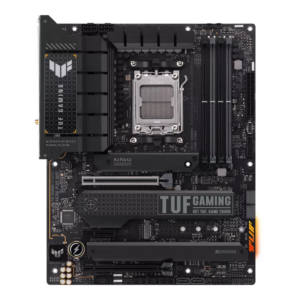
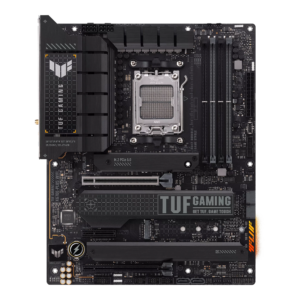
ASUS TUF GAMING X670-E PLUS WIFI DDR5 AMD AM5 MOTHERBOARD
Model: TUF GAMING X670E‑PLUS WIFI; CPU: AMD AM5 socket supporting Ryzen 7000, 8000 and 9000 series; Chipset: AMD X670.
Memory: Four DDR5 DIMM slots, up to 192 GB, supporting speeds to DDR5‑8000 (OC); Graphics: 1 × DisplayPort 1.4 (max 8K @ 60 Hz) and 1 × HDMI 2.1 (max 4K @ 60 Hz); Expansion: 1 × PCIe 5.0 x16 (full x16), 1 × PCIe 4.0 x16 (x4 mode) and 2 × PCIe 4.0 x4 slots.
Storage: Four M.2 slots (PCIe 5.0 x4, PCIe 4.0 x4, PCIe 3.0 x4) and four SATA 6 Gb/s ports; Networking: Realtek 2.5 Gb Ethernet, Wi‑Fi 6E (802.11ax) and Bluetooth 5.2; USB: Ten rear ports (including USB 3.2 Gen 2×2 Type‑C) and nine front ports.
SKU: 1082966 -